Wednesday, March 27, 2013

Today's American Worker Difficulties

6 Challenges Affecting The American Worker
The definition of the American Worker has changed; by the turn of the twentieth century, United States citizens have moved away from industrialization to service work. With outsourcing major companies to foreign countries for cheaper goods, the majority of Americans work in the service industry (i.e. at grocers, hotel services, etc.). Yet these problems with service businesses have affecting Americans negatively today.
Fair wages for fair pay, health, and other benefits have been fought for and, unfortunately, causes many Americans to lose jobs (because they could easily be replaced by cheaper part-timers). 

Tuesday, March 26, 2013

Promotional Video of the New Deal

This youtube video practically frames the American worker during the New Deal period in a nutshell. Great to watch when searching for a basic understanding of what FDR set out to do during his "hundred days."
 
The History Channel's website is also a great source to check out the New Deal and what it meant for the American Worker. Below are some of the primary sources I found interesting on the site's photo gallery.
 
 
So much propoganda was used coming out of the Great Depression. FDR promised Americans a New Deal. No one really knew what it was going to be; however they elected F. Roosevelt, because any offer was better than H. Hoover.
WPA was created to employ Americans.

They found jobs for the starving American artists.

Large scale projects such as constructing dams, bridges, and airports kept the American worker occupied for years.

The C.C.C. recruited America's young men to work on developing America.

Women weren't left out of the New Deal.

Wednesday, February 27, 2013

Cult of Domesticity

 
Today in class we've discussed another important job regarding the American worker in U.S. History. The Cult of Domesticity created an ideology of the perfect house wife. Here are some depictions of what was expected of women while the husband was out earning the money.
 
 
Here we see the domestic house wife in charge of ironing, dishes, laundry, sewing, and cleaning the bathroom and kitchen. All of these tasks humorly done with a smile and a sense of gracefulness.
 
 
Here is a political cartoon over the suffrage movement

 
I found this cartoon funny, because as a domestic housewife, women may feel trapped in their homes.

 
Again, a cartoon depicting women expectations.

Cult of Domesticity Advertisement is shown below. The 'perfect' image of Mrs. Brown is shown as every other woman's desire in this illustration.

 
I found this Family Circus newspaper cartoon relevant to our Cult of Domesticity discussion in class. The daughter is seriously doubting her mother's ability to keep up with the housework, assuming she must have had a job her whole life.

Motherhood is considered by most as a full time job.

 
A "Woman's Job" includes:
Shopping

Ironing

Cleaning
 
Cooking

Raising the children to their respective roles

The good wife's guide includes:
Have dinner ready
Look good
Be happy and interesting.
Clear away the clutter just before your husband walks through the door.


The Workers' Anvil

As the Industrial Revolution took hold in American society, many people and their businesses were greatly benefitted.  However, what was lost in this transition of agriculture to industry was the protection of the rights and well-being of the workers themselves.  The following song, written by Laura M. Griffing, is called "The Workers' Anvil."  It is about the fact that the laborers of this time were in need of protection and improvement of working conditions.  In favor of the workers' anvil, trade unions eventually developed in the later 19th century.


The Workers’ Anvil. 
 Words by Laura M. Griffing. 
Arranged by C. F. Mayering. 
Strike, strike, the Workers anvil, 
For the cause of Labor, 
Strike for your homes and freedom, 
For each friend and neighbor, 
Ev'ry one. 
For this great cause 
And reform laws, 
Now demand complete protection. 
Strike, strike, the fire is glowing— 
Heed ye not the minions, 
Seeking to capture Labor, 
And to clip the pinions 
Of our clan. 
Will you grant all 
At the first call, 
And submit to party factions. 
Guard, guard the right, companions; 
'Tis a phantom power, 
From civic rule descending, 
To despoil our dower. 
Will you come? 
Are you all strong, 
To fight the wrong, 
And advance the cause of labor. 
Hail, hail, ye brother workmen, 
Fierce and sharp the battle; 
Make life a glorious triumph 
Let the volleys rattle 
Loud and deep. 
Take a bold stand, 
Throughout the land, 
Thus to guard the rights of freemen. 
Sound, sound the labor tocsin, 
For our homes are cheerless; 
Stay not, for Justice guides you 
Be ye strong and fearless. 
Guard your right! 
If you dare, do! 
And all be true— 
You will gain a glorious victory. 

Wednesday, February 20, 2013

Unions Influence on the American Worker

Though criticized today by many of the Republican parties, Unions have served a purpose of defending the, "Little Guy," in the growing industrialization of America; many still depend on their unions to improve poor working conditions and force wealthy employers to pay them an equal wage for the work that they do:

All these benefits were established thanks to labor unions during the Age of Industrialization to combat big business. Labor Unions helped to modernize many of the benefits that you expect when you start your jobs; they helped to mold the American Worker.

Today, the Right-to-Work Law, adopted in twenty-four states across the United States, is a law that lowers the powers of labor unions: yes, many of today's population believes unions to be outdated, and are willing to rid their jobs of unions, but the basic purpose of a union is to help you live off of the pay and benefits that you receive.

http://www.youtube.com/watch?v=Bco0OUmHGa0
This link is to the reaction of the passing of the Right-to-Work law in Michigan in 2012, and what that means to those unions that help establish the American Worker.

Women in the Workforce

Women have prevailed in the workforce since the beginning of the twentieth century, contributing to their husband's income, along with their children's. However, women in the workforce have had, and still must overcome, the problem of bias within the workforce.

http://web.ebscohost.com.libproxy.ocean.edu:2048/ehost/pdfviewer/pdfviewer?sid=debd7545-793e-4516-b9eb-ae481c2ccdf5%40sessionmgr114&vid=7&hid=120
This document illustrates the various institutions that women in history have attempted to set up in the hopes that they will receive equal pay for equal work within a, mostly patriarchal society.
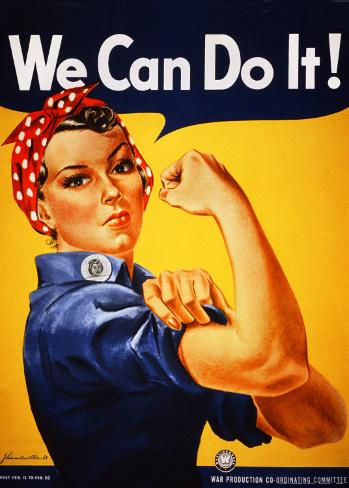
During World War II, women took control of the labor production while the men fought. Below was the famous poster that hoped to boost morale within factories, later called, "Rosie the Riveter."

image courtesy of google images

Wednesday, February 13, 2013

American Worker

 
The Mafia and Child Labor
 
        
In the 1800s, early 1900s, it was very common for children and teens to be working in harsh and dirty working areas for little to no pay.  Since the children had to work, they couldn't go to school and their life-time earnings were reduced.  The kids were often abused and neglected and some were not old enough to work a machine.  It was common for mob members to sell orphans and kids into factories and receive their pay.  Many bosses would get away with paying the kids nothing. The mafia, and mobs alike both played a part in this crime. They would take advantage of children, mostly children of immigrants, and put them in sweatshops or other harsh labor for little or no pay. Children were normally better for these tasks than adults because their hands were smaller, and their bodies could fit into smaller caves and caverns. For example, children were often used in sweatshops where fabrics were made because their fingers were more nimble and could move about the strings more freely. Children were also more useful in mining because they could get down into small areas where adults could not reach. They also could be lowered into caves easier because they were lighter. A picture of this can be seen above; it was taken in Pennsylvania in 1910.


(LEFT)- Young boy working in a dirty and dangerous conditions while his pay is given to a crimelord.